AGES 7 TO 9
Peel, slice, mix, spread
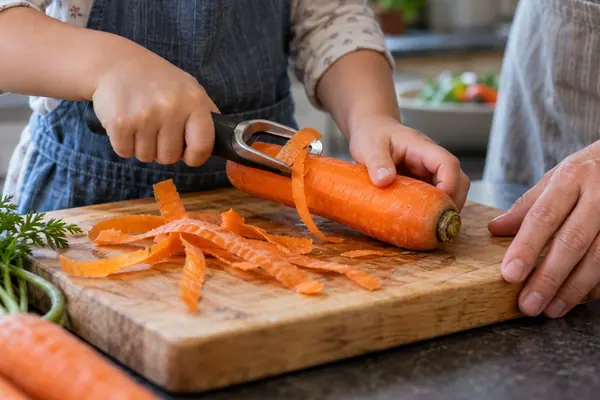
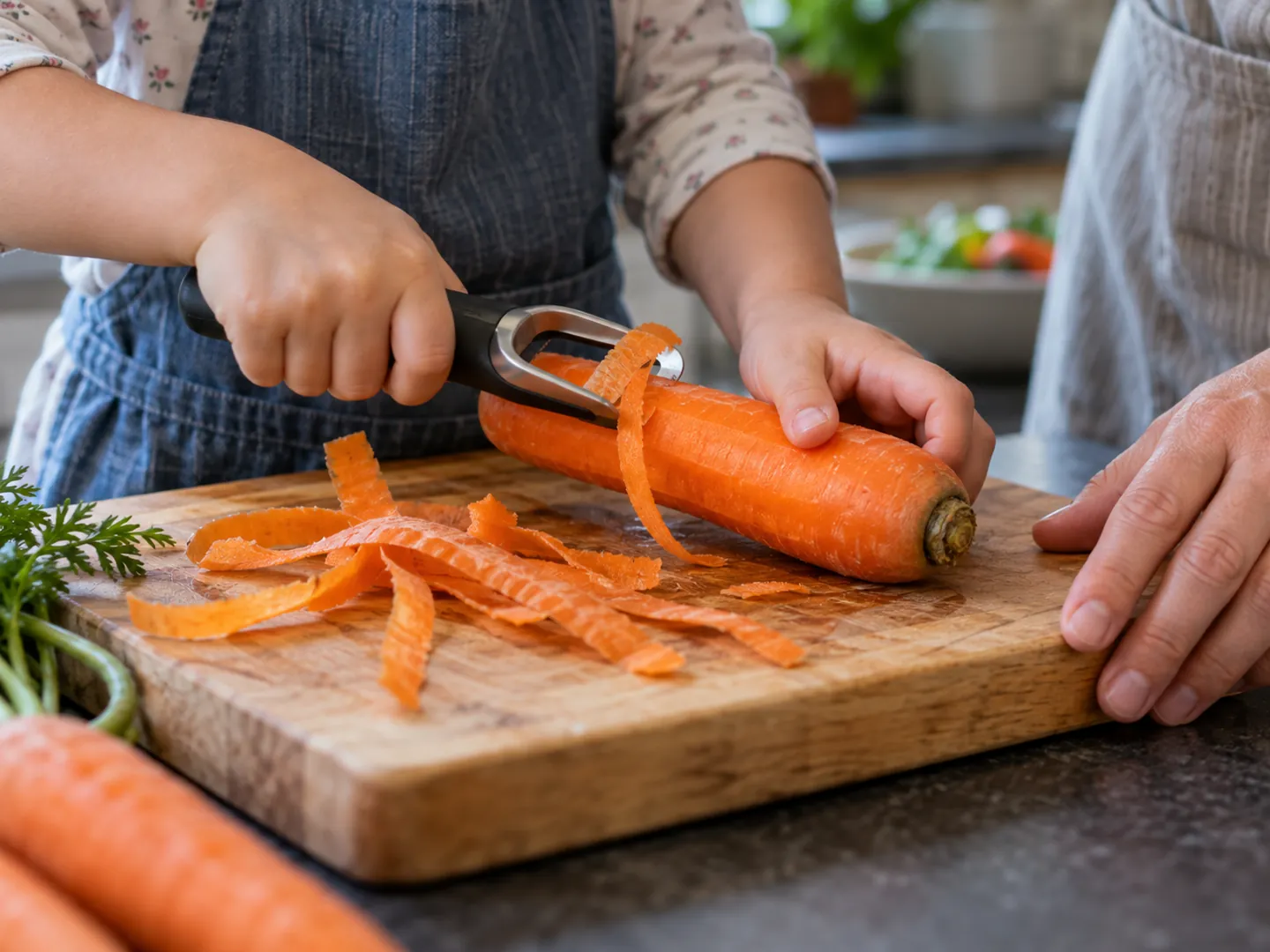
The food competences say that by 7 to 9, children should use a small knife, chopping board and measuring spoon safely, and peel, grate and spread with supervision.
Match a job bittybitechef
WHAT THE GUIDANCE SAYS
Children can do more in the kitchen than we think.
Match a job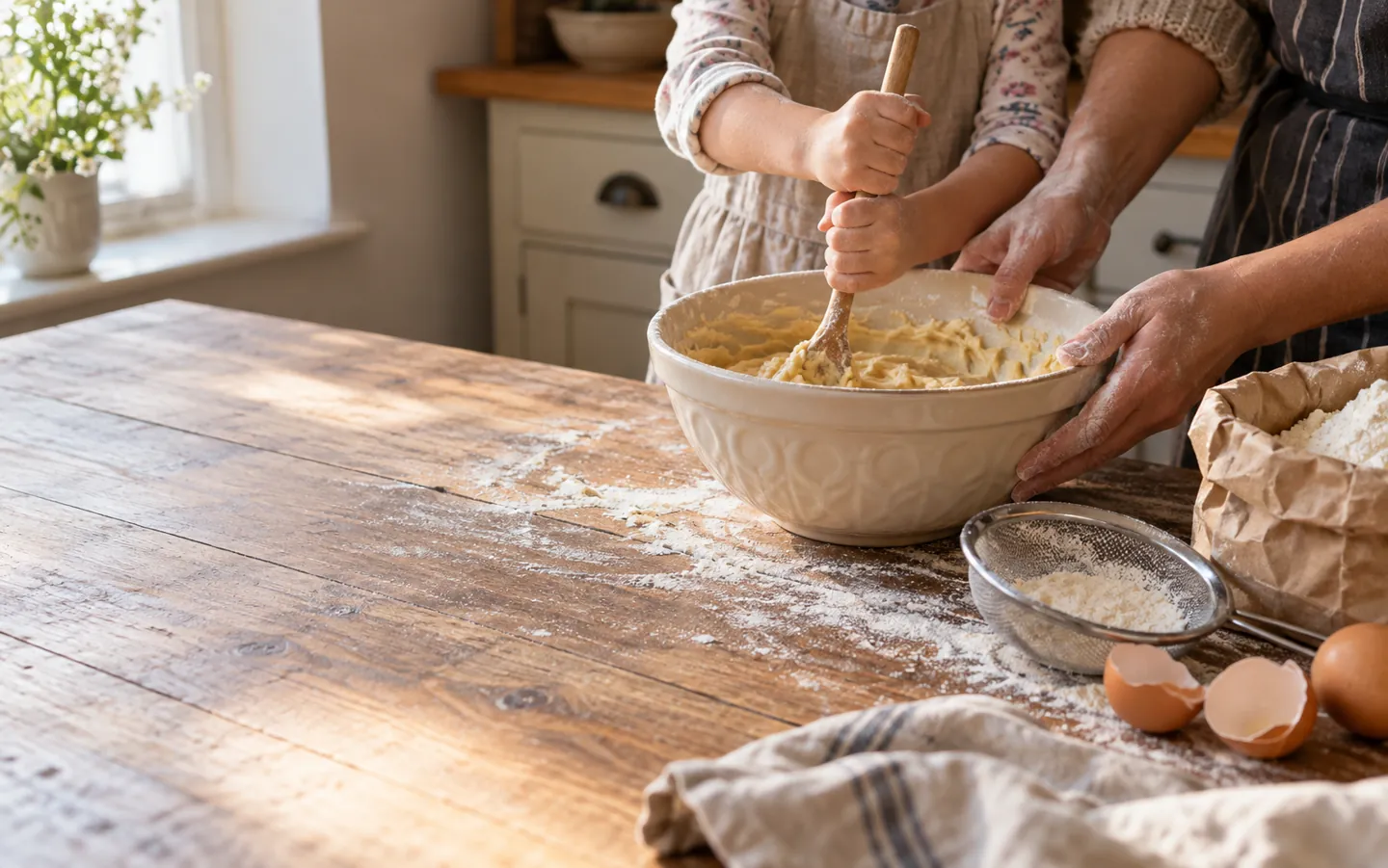
WASH, TIEthen cook
A UK consensus on food competences sets out what children should manage at each age, from peeling and spreading at 7 to 9 to planning a balanced meal at 16. Add a little burn safety and the kitchen becomes a classroom.
At a glance
+76%
Extra salad eaten by children who helped cook
In an experiment with 47 children aged 6 to 10, those who prepared lunch with a parent ate 41.7 g more salad, 27% more chicken and 24.4% more calories than those whose parent cooked alone.
VEGETABLES · APPETITE (2014)
≈ 1 in 2
Children's burns that happen in the kitchen
The Child Accident Prevention Trust says around half of all children are burnt in the kitchen, from kettles, hot drinks and saucepans as well as ovens.
BURNS · CAPT
TWO NUMBERS WORTH KNOWING
One figure on eating,
one on where burns happen.
The study's authors note that because young cooks also ate more calories, parents should keep portion sizes in mind. CAPT adds that a hot drink can still scald a baby 15 minutes after it is made.
A QUICK JOB MATCH
Pick a kitchen job to see the age by which the UK food competences expect children to manage it. The bar shows how far along the competences it sits.
Based on the Consensus view on food competences for children and young people, which the competences say can be met at home, at school or through other activities.
THE SHORT ANSWER
Skills build year by year.
Heat and sharp knives come later, and with help.
AGES 7 TO 9
The food competences say that by 7 to 9, children should use a small knife, chopping board and measuring spoon safely, and peel, grate and spread with supervision.
Match a jobHEAT
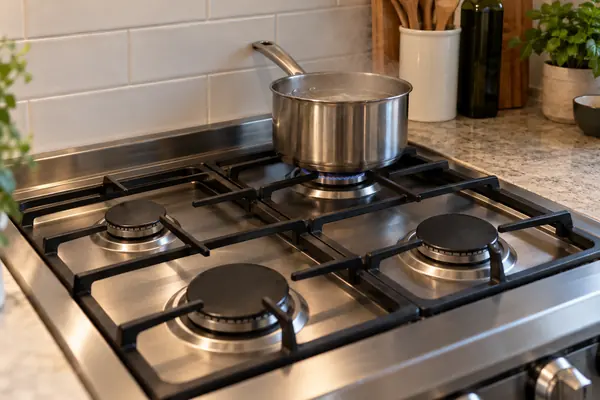
The Child Accident Prevention Trust says around half of children's burns happen in the kitchen. Use the back rings and turn pan handles away from the edge.
Kitchen habitsEATING
In a 2014 study, children aged 6 to 10 who helped cook lunch ate 76% more salad than children whose parent cooked alone.
See the numbers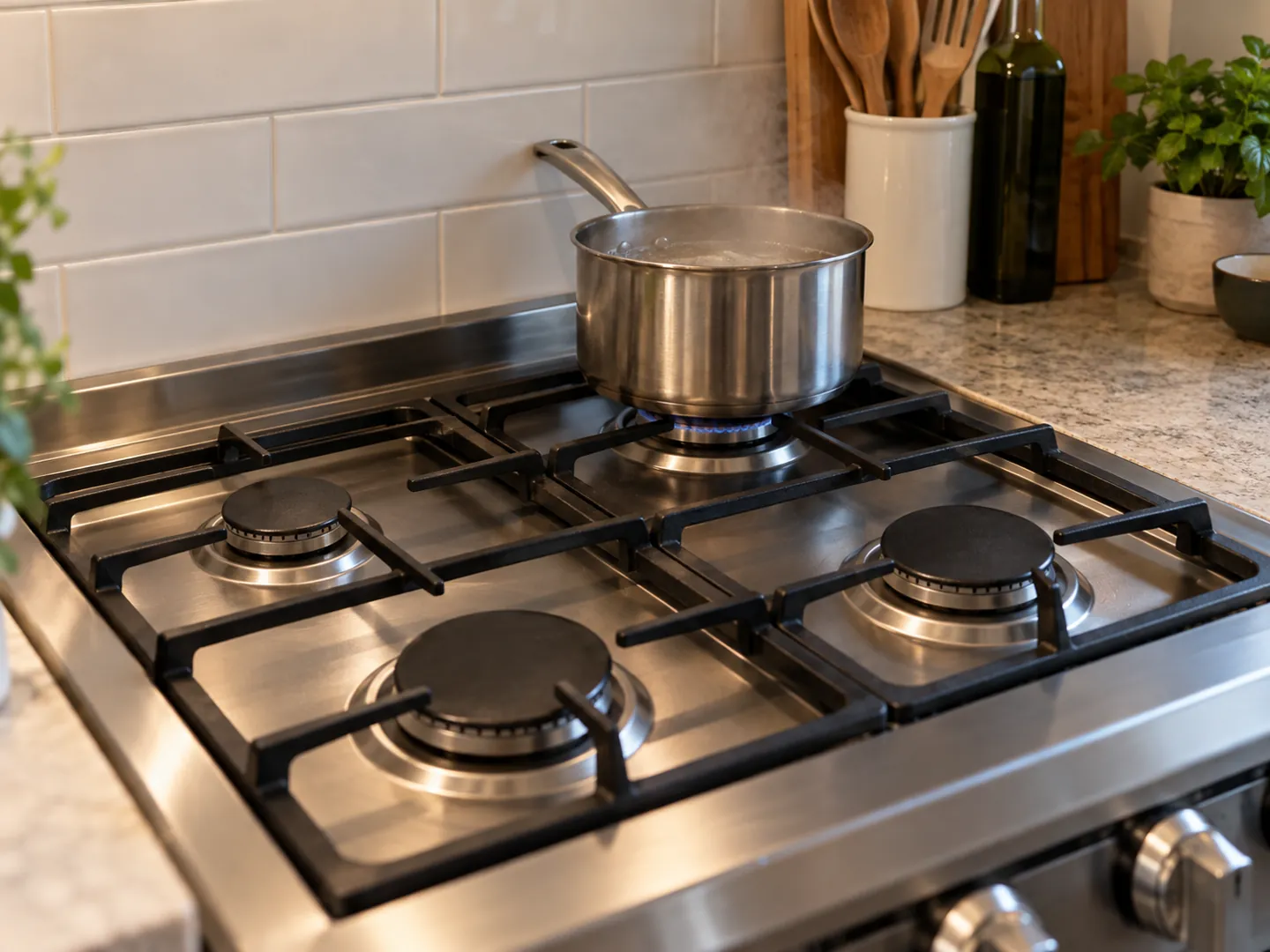
FOUR HABITS TO TRY
These come from the food competences, NHS hand-washing advice and CAPT's burn prevention tips. None needs special equipment.
The NHS says to wash hands for about 20 seconds, and before and after handling raw foods like meat.
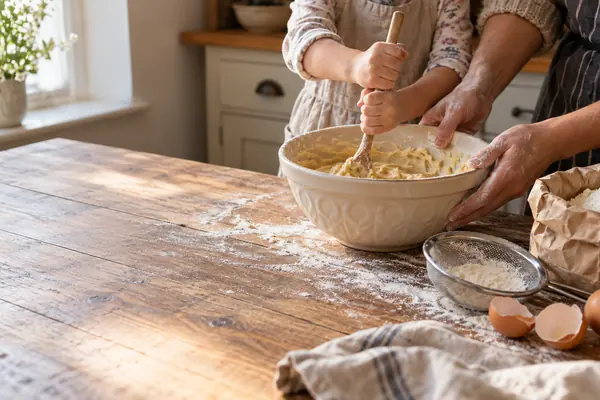
Peeling, grating, mixing and spreading build skills before heat and sharper knives are involved.
Cook on the back rings, turn handles from the edge and push the kettle and its cord to the back.
By 11 to 12, children should know to keep raw meat away from other food. Practise it together.
WHY HEAT WAITS
CAPT says a young child's skin can be up to 15 times thinner than an adult's, so a scald that would sting an adult can badly injure a toddler. Until about 4 to 6 months a baby's grasp reflex is stronger than its pain reflex.
Hobs can stay hot after they are switched off, and young children may not remember warnings. CAPT suggests a safety gate or a highchair to keep the youngest out of the way while you cook, and putting a child down before picking up a hot drink.
Questions
The food competences expect children of 7 to 9 to name and use basic tools safely, such as a small knife and chopping board, and to slice with supervision.
In one 2014 experiment, children aged 6 to 10 who helped prepare lunch ate 76% more salad than those whose parent cooked alone. They also reported feeling more positive and more in control.
The NHS says about 20 seconds, the time it takes to sing Happy Birthday twice, including before and after handling raw foods like meat and vegetables.
The Child Accident Prevention Trust says most young children are burnt at home and around half of all children are burnt in the kitchen, often by hot drinks, kettles or saucepans.
The competences say that by 16 students should plan, prepare and safely cook dishes for a healthy, varied and balanced diet, and change recipes to make them healthier.
Sources
ABOUT THIS NAME
bittybitechef.com is part of the DoodleSale portfolio. It isn't in an auction right now, but you can ask about leasing it.